
Thinking about swapping a tub for a shower can make your Minneapolis bathroom feel bigger, safer, and more modern. You’ll weigh cost, timeline, and whether to pick a custom tile job or a faster prefab option, and this article helps compare those choices so you can decide which tradeoffs matter most for your home.
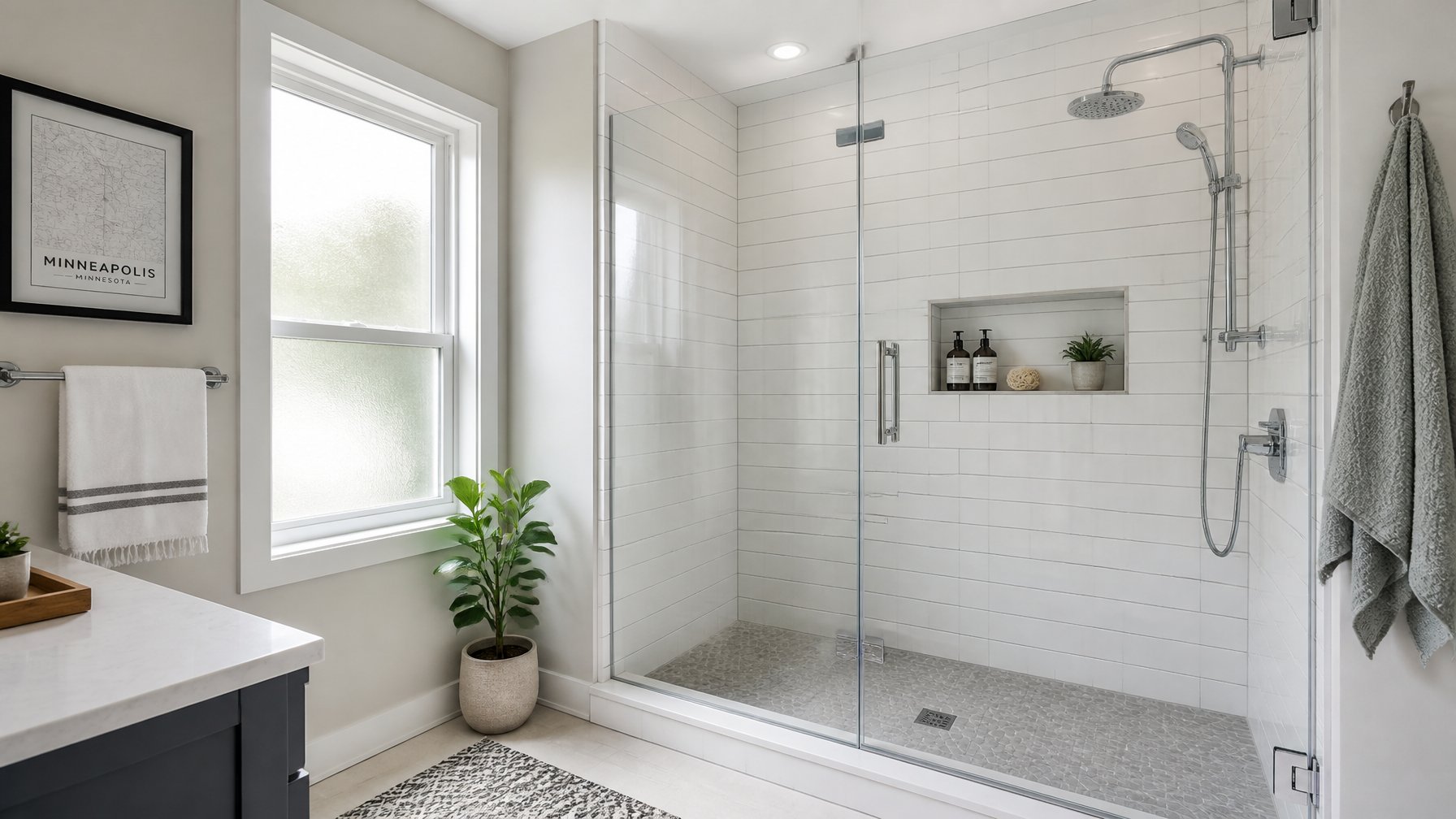
You’ll learn how different conversion styles affect budget, accessibility, and long-term maintenance so you can pick the best fit for your needs. The piece points out practical questions to ask contractors, what to compare on material and layout options, and which features add value without unnecessary expense.
1) Curbless walk-in shower conversion with linear drain
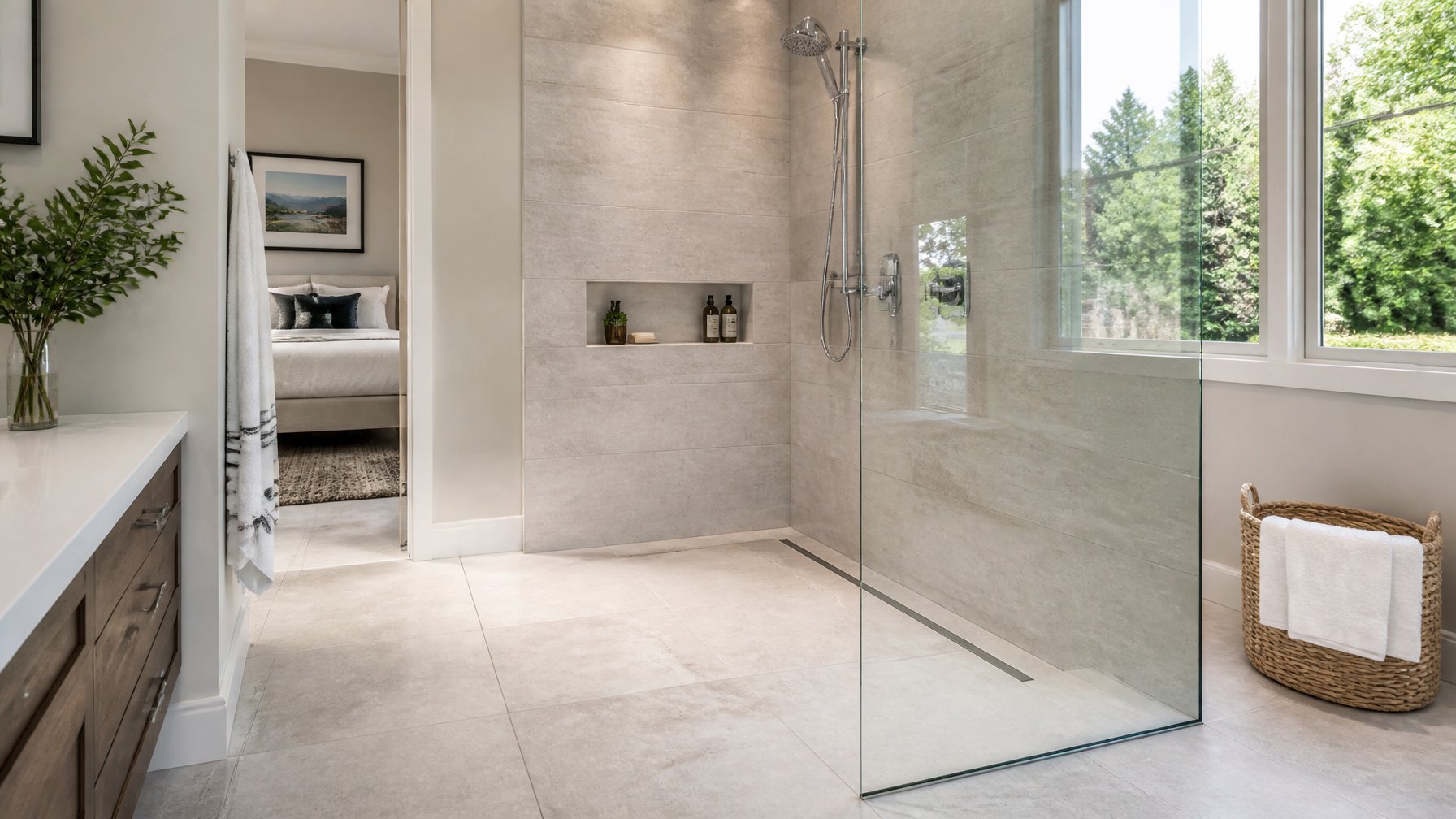
A curbless walk-in shower removes the tub rim and creates a smooth floor entry. Homeowners should compare subfloor slope options and ask if the contractor will water-test the pan to ensure proper drainage.
Linear drains work best along one wall and allow larger-format tile. They must choose between center versus wall outlet drains, and trade off tile style for required slope direction.
Ask about waterproofing method, such as liquid-applied membranes vs. sheet systems. They should confirm warranty terms and curing times, since Minneapolis winters may affect scheduling.
For visual ideas and related services, see walk-in shower conversions. All images should show realistic home-improvement photo style with minimal staging.
2) Frameless glass enclosure to open sightlines
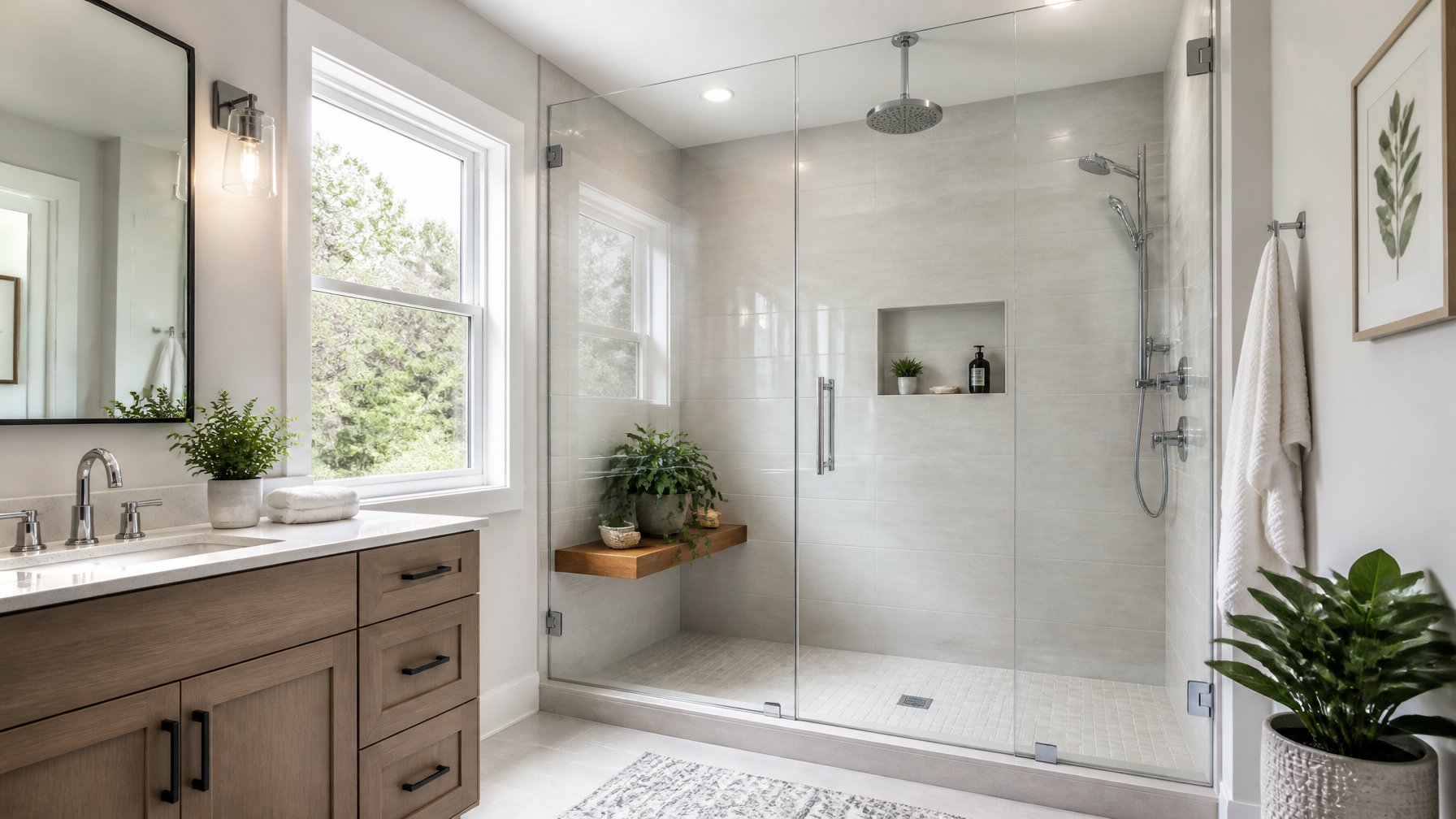
A frameless glass enclosure makes the bathroom feel bigger by removing bulky metal frames. Homeowners should compare glass thicknesses (3/8" vs 1/2") and hinge types to balance cost, durability, and ease of cleaning.
Ask if the installer uses tempered, low-iron glass to improve clarity and safety. They should also confirm water-seal details and threshold options; a low or no-threshold design looks cleaner but may need better floor slope to prevent leaks.
Consider tradeoffs: frameless glass costs more and can show water spots, but it boosts light and modern appeal. For planning and contractor matching, visit the main service page to learn about available enclosure styles and installation steps.
3) Tile-to-ceiling waterproof cement board surround
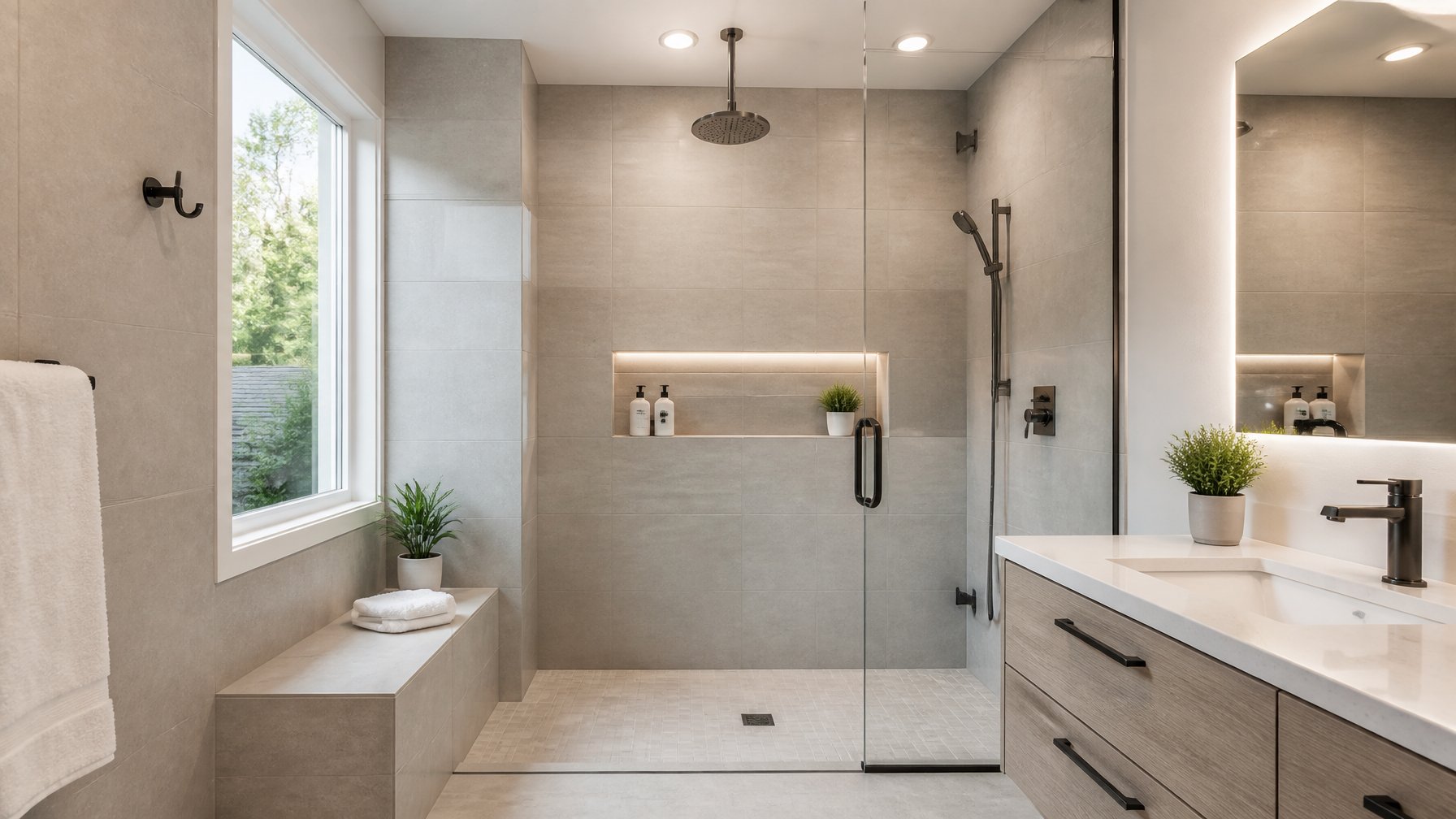
They should choose cement board over drywall for durability and water resistance. Compare cement board types, thickness, and whether a waterproof membrane is needed behind tiles. Ask about seam treatment and fasteners; poorly sealed seams cause leaks.
They should pick tile that suits cleaning and style. Porcelain and glazed ceramic resist stains and need less sealing than natural stone. Trade off: larger tiles mean fewer grout lines but can be harder to slope and cut.
They should request a clear plan for waterproofing and slope to the drain. Ask the installer to show product specs and a sketch of the wall layout. For more project guidance and services visit the homepage.
4) Low-profile prefabricated shower pan (Schluter Kerdi-Line)
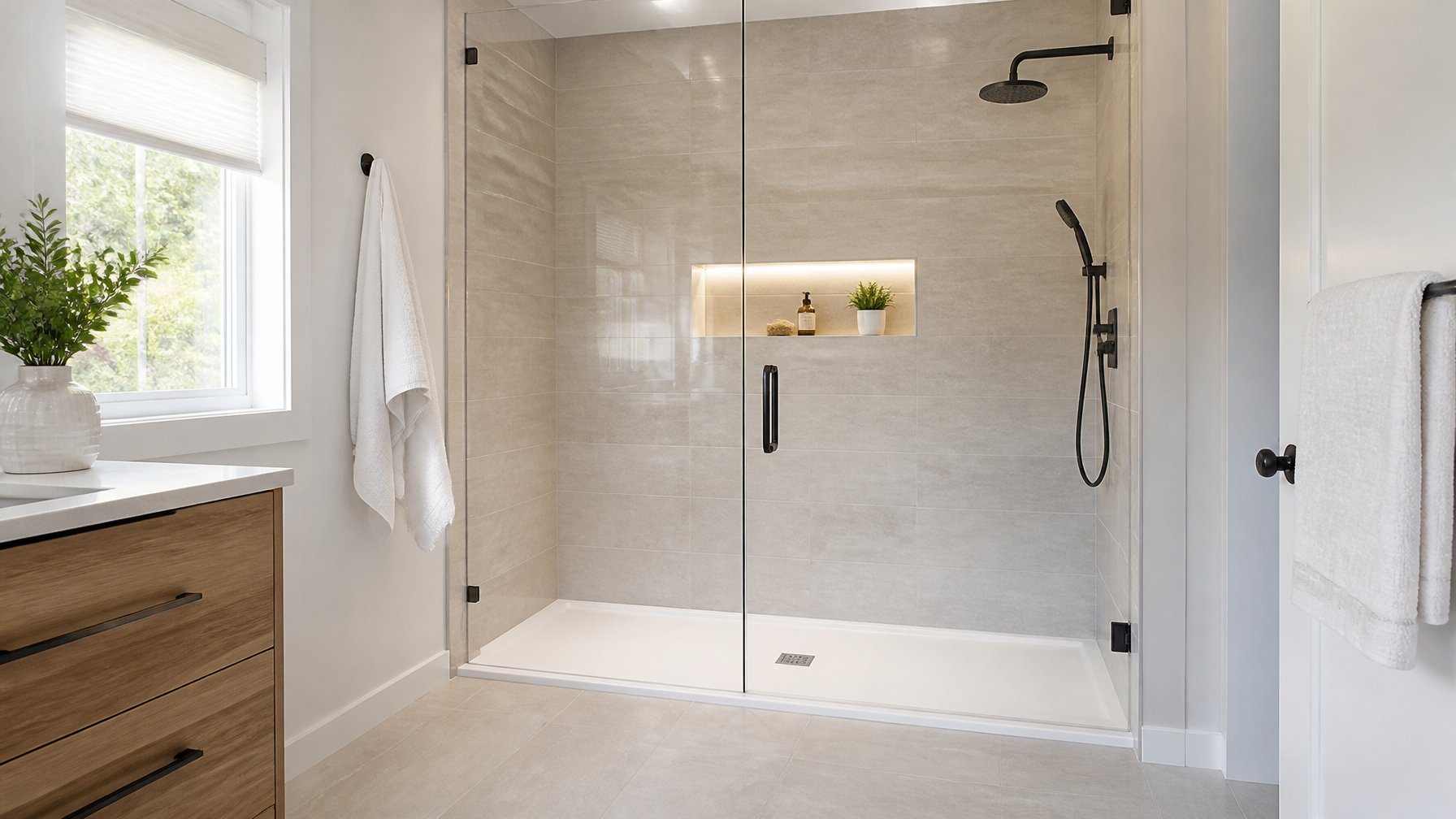
A low-profile prefabricated pan like Schluter Kerdi-Line gives a thin, waterproof base that lowers step-up height. Homeowners should compare drain location options, slope direction, and finished-floor compatibility before buying.
Ask the installer about subfloor prep and waterproofing tie-in to the existing wall. The tradeoff is speed and predictability versus limited style and tile layout flexibility.
Measure clearances and confirm threshold height for accessibility and code compliance. For a seamless project, they can check a local shower remodeling service for quotes and installation guidance.
5) Built-in niche with LED accent lighting
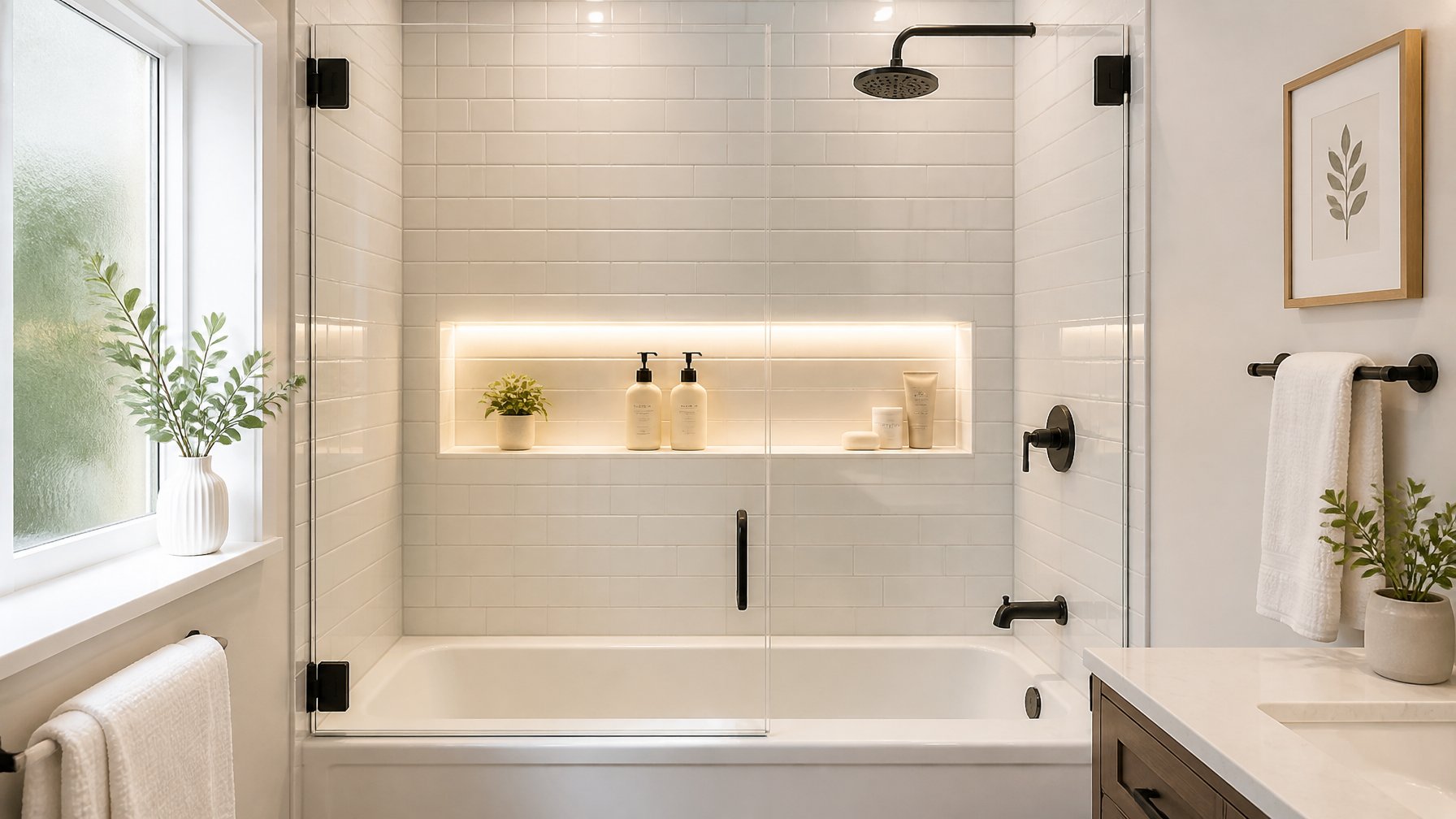
A recessed shower niche adds storage and a cleaner look. Homeowners should compare niche sizes and shelf placement to fit bottles without crowding.
Decide on waterproof materials and trim that match tile. Ask contractors about waterproofing methods and led strip ratings to avoid moisture damage.
Choose warm or cool LED tones based on bathroom lighting and paint colors. Consider dimmable drivers and placement so light highlights items without glare.
Weigh cost versus convenience: a larger niche and higher-grade LEDs cost more but reduce future updates. See shower conversion services for guidance on materials and installation choices.
6) Grab-bar integrated shower bench for accessibility
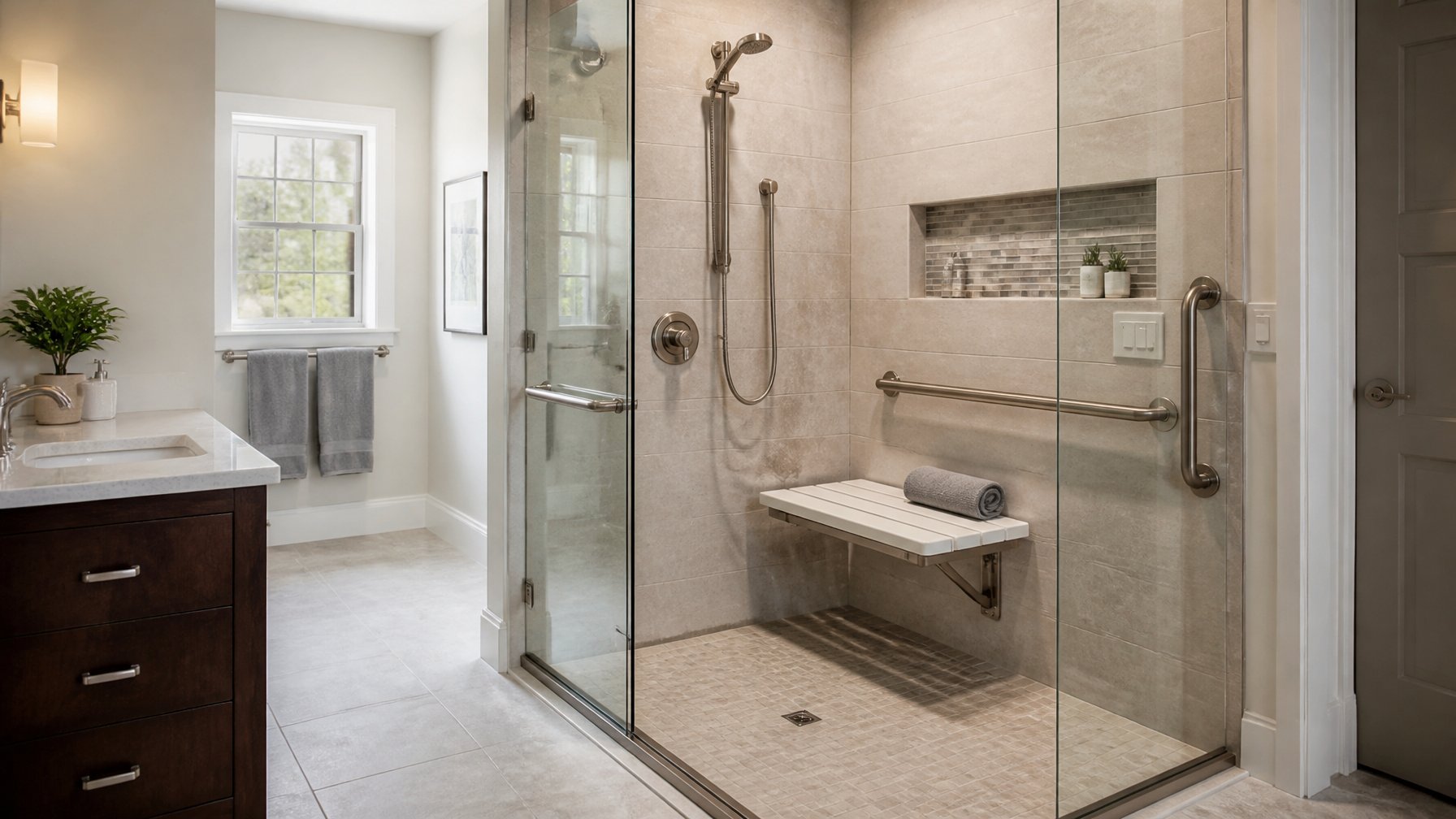
A grab-bar integrated shower bench combines a sturdy seat with built-in handholds. Homeowners should compare weight ratings, bench depth, and bar placement to match mobility needs and body size.
Ask whether the bench is wall-mounted or fold-down. Wall-mounted benches hold more weight but need solid studs or backing; fold-down ones save space but may have lower load capacity.
Consider materials and slip resistance. Teak, waterproof laminate, and molded composites resist water; textured surfaces reduce slips. Check finish options and how the bars mount to avoid corrosion.
Weigh tradeoffs between comfort and clearance. A deeper bench is more comfortable but reduces shower space. Measure door swing and shower width before choosing.
For installation or design ideas, see the bathroom remodeling service page.
7) Rainfall and handheld dual shower valve combo (Delta Trinsic)
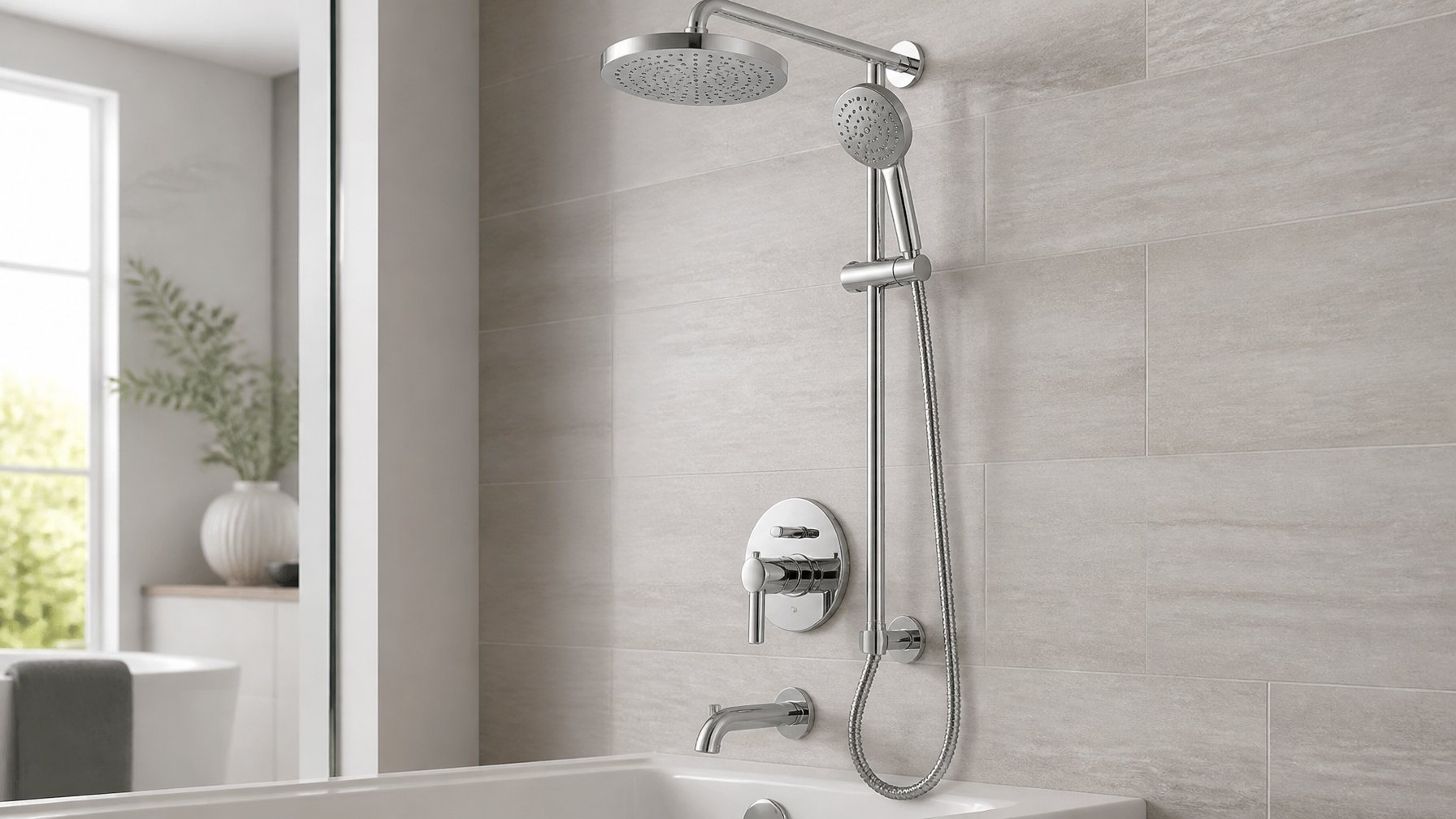
This combo adds a wide rainfall head plus a handheld for rinsing and cleaning. Homeowners should compare spray coverage, flow rate, and whether the valve supports two outputs at once.
Ask if the valve rough-in fits existing plumbing or needs relocation; moving supply lines raises cost. Check finish options and ease of cartridge replacement for future maintenance.
Weigh control style: single lever for simplicity or thermostatic valve for steady temperature. Measure ceiling height—rainfall heads need enough clearance to avoid splashing.
Consider water-saving aerators or low-flow settings to meet Minneapolis codes and lower bills. See shower conversion and replacement services for matching trim and installation.
8) Heated tile floor retrofit under new shower threshold
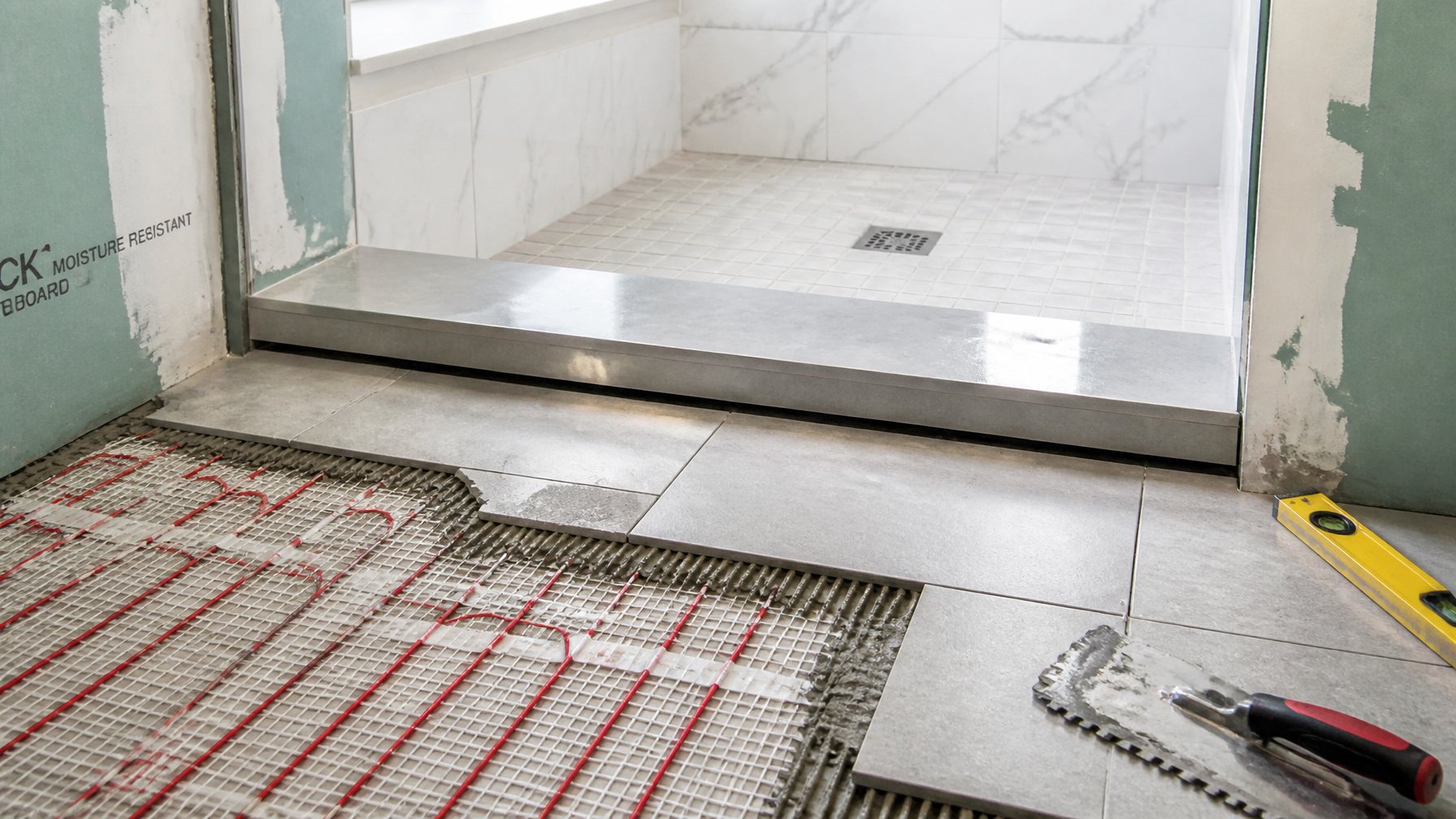
A heated tile floor makes stepping into a new curbless shower warmer and more comfortable. Homeowners should compare electric mat systems versus hydronic (water-based) systems for cost, installation time, and heat-up speed.
They should ask contractors about thin-set compatibility, insulation needs, and how the thermostat will sit near the new threshold. The tradeoff is simpler electric retrofits with lower upfront cost against hydronic systems that run cheaper long-term in cold climates.
Measure the floor depth under the threshold to ensure the heating element fits without raising the curb too high. Check that tile type and grout match the rest of the bathroom for a seamless look.
Consider energy use and control options; programmable thermostats save power and add comfort. See shower and bathroom remodel services for details on matching a heated floor to a tub-to-shower conversion.
9) Factory-lined acrylic shower enclosure for quick install
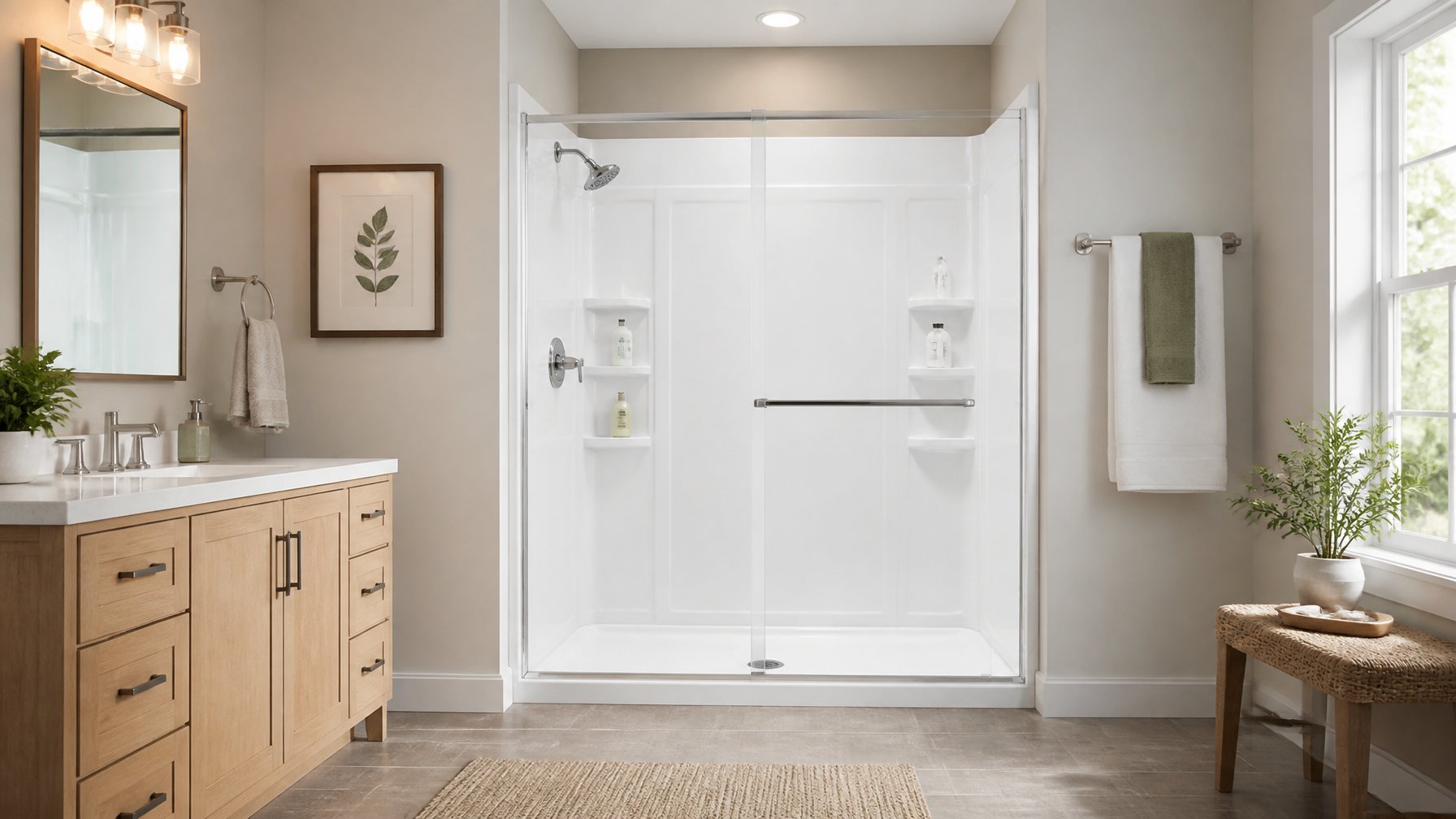
A factory-lined acrylic enclosure fits over the existing tub surround or drywall and installs fast. Homeowners should compare panel thickness, edge finish, and warranty length to balance cost and durability.
Ask installers about custom fit options and whether seams need caulk or PVC trim. The tradeoff is speed versus a fully tiled look; acrylic is low-maintenance but less upscale than tile.
Check for matching accessory options like shelves and grab bars to avoid extra drilling later. They should also measure doorway and alcove size and confirm water-tight backing during the estimate.
For more installation details and service options, visit the bathroom remodeling page. Images for planning should show realistic finished enclosures, not staged studio photos.
10) Transitional farmhouse matte-black fixtures and valve trim
Matte-black fixtures add bold contrast to a light, farmhouse-style shower. Homeowners should compare finish durability, coating warranties, and whether the black finish resists water spots and scratches.
Choose valve trim that hides rough-in plumbing for a clean look. Ask plumbers about valve compatibility and whether pressure-balancing or thermostatic valves are better for local cold winters.
Mix rustic materials like wood-look tile with modern black hardware for a balanced transitional style. Consider tradeoffs: black shows soap scum more but needs less polishing than polished chrome.
For parts and compatible valve options, check the company homepage for matching trims and finishes. They should list product specs, flow rates, and warranty details to compare before buying.