
You want a bathroom that feels neater and works better for daily life, especially in Minneapolis homes where space and winter gear need smart storage. This article shows practical vanity upgrades that help cut clutter, save floor space, and make cleaning faster so the bathroom stays usable and calm.
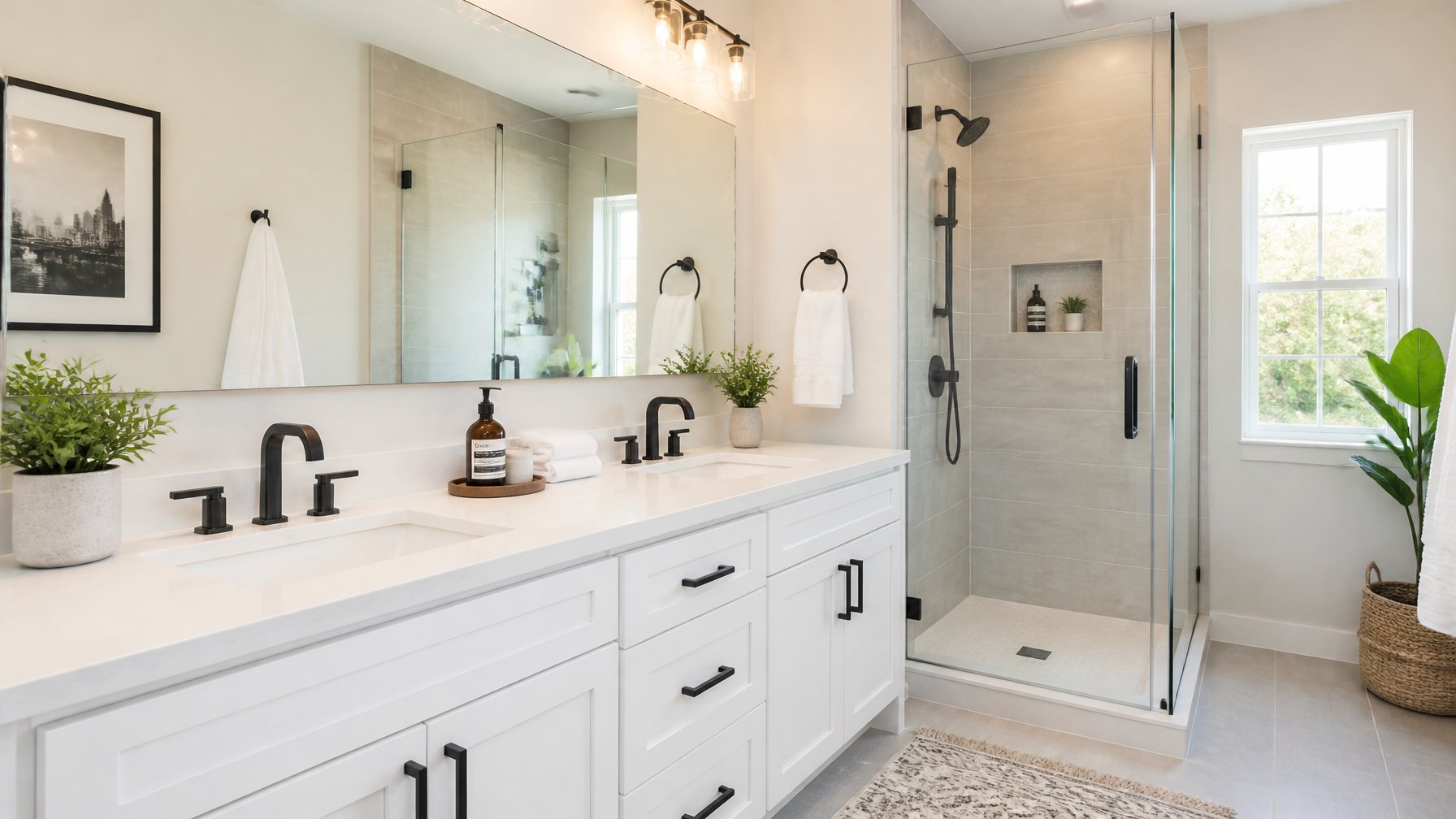
Compare materials, storage styles, and installation trade-offs so you pick upgrades that last and match your layout. It also points out questions to ask contractors, what to expect for costs, and how small changes can free up space without a full remodel.
1) Floating quartz vanity with integrated sink (e.g., Cambria Minuet)
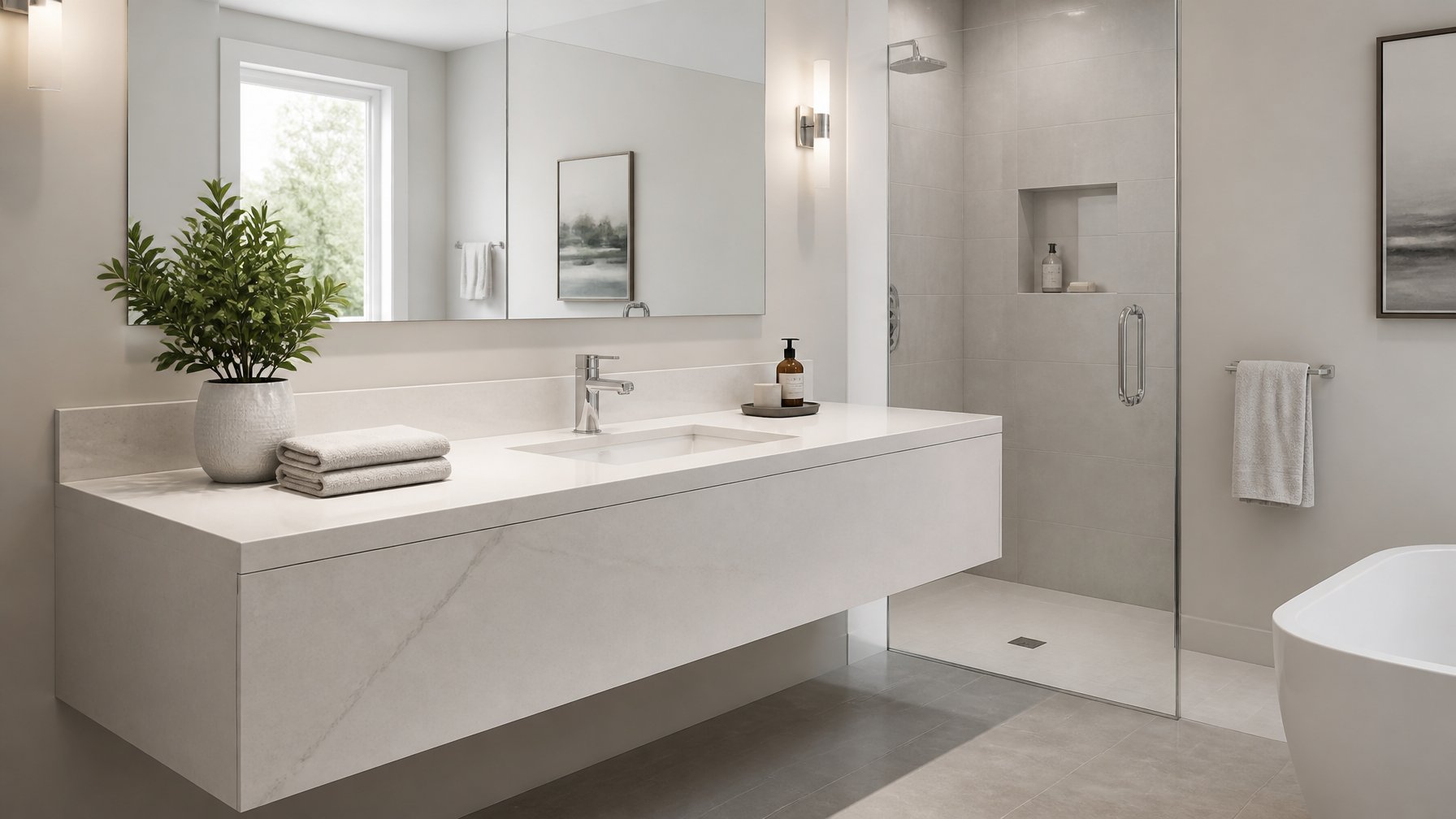
A floating quartz vanity frees floor space and makes small Minneapolis bathrooms feel larger. Homeowners should compare quartz brands for stain resistance and seam visibility, and ask about integrated sink thickness and mounting hardware.
They should weigh storage tradeoffs: wall-mounted units save room but reduce under-sink cabinetry. Check backing and wall studs; ask if a plywood backer or reinforced wall is needed for safe mounting.
Choose a matte or low-gloss finish to hide water spots and match common tile choices. For installation guidance and layout help, see the bathroom remodeling page.
2) Wall-mounted medicine cabinet with LED mirror (e.g., Kohler Verdera)
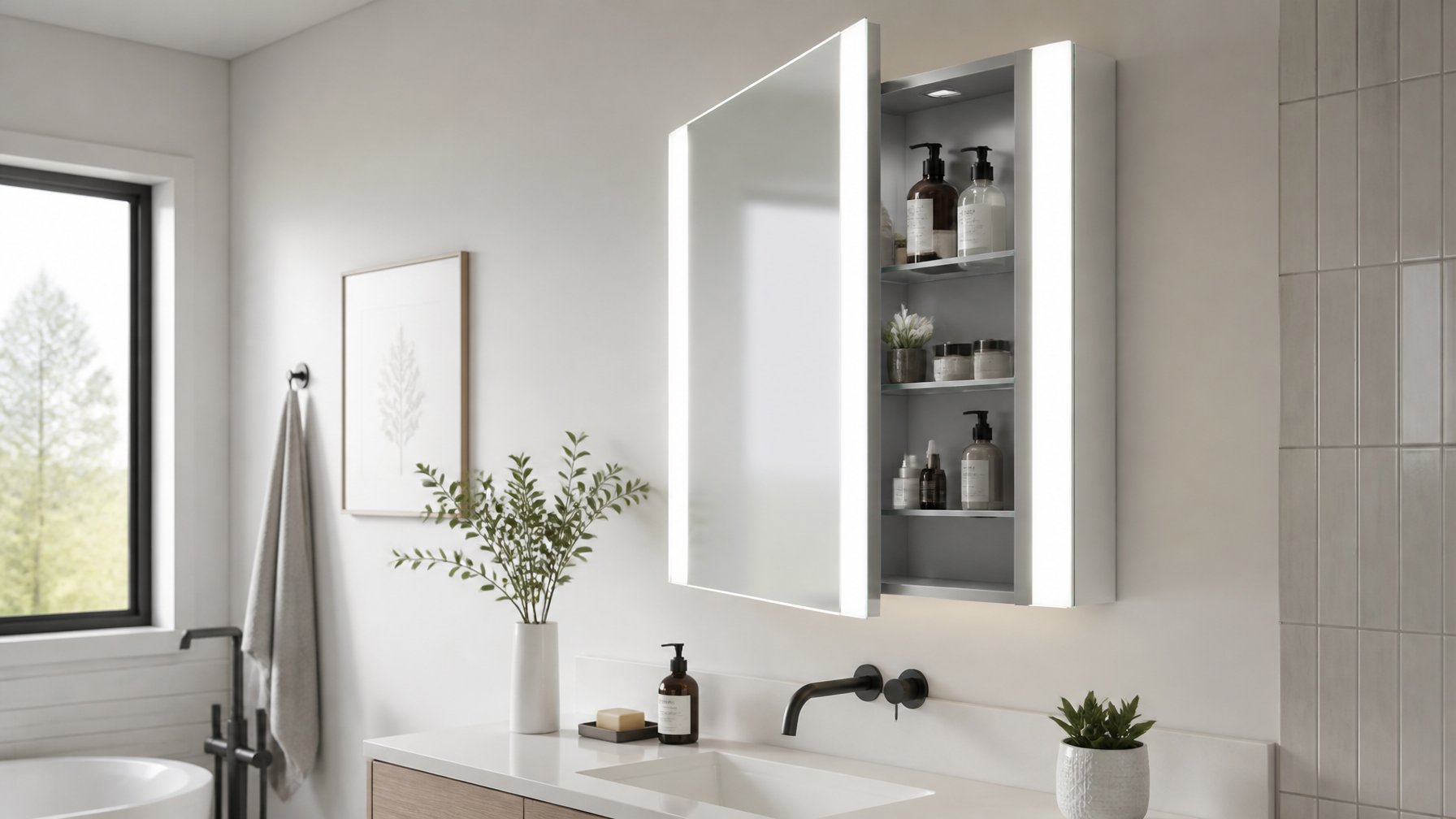
A wall-mounted medicine cabinet with an LED mirror saves counter space and adds task lighting. Homeowners should compare cabinet depth, mirror size, and light color temperature to fit their routines and mirror placement.
Ask about soft-close hinges, adjustable shelving, and integrated outlets for electric toothbrushes or shavers. Tradeoffs include slimmer storage vs. deeper cabinets; deeper units hold more, but protrude more into the room.
Check LED brightness and CRI for true skin tones. Verify installation needs, such as wall studs, recessed vs. surface mount, and whether an electrician is needed for hardwired lighting.
For inspiration and installation guidance, see the homepage. Images should show realistic home-improvement scenes: a framed LED mirror over a sink, open shelves with toiletries, and a side view showing cabinet depth.
3) Under-sink pull-out organizer for soft-close drawers (Rev-A-Shelf)
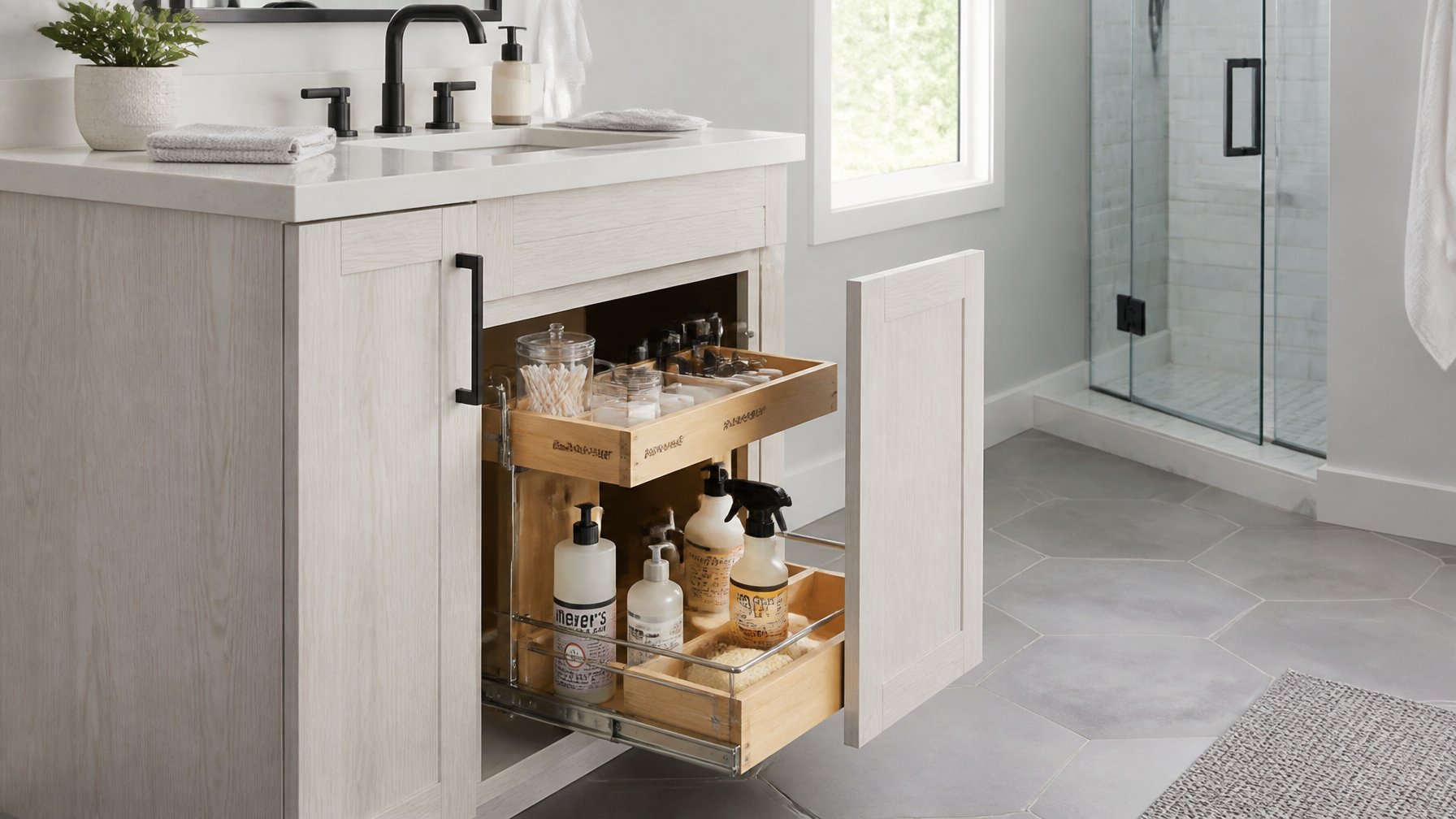
An under-sink pull-out organizer fits inside soft-close drawers to keep bottles, sponges, and cleaning tools tidy. Homeowners should compare load ratings, drawer width, and height to avoid interference with plumbing traps.
Ask about full-extension slides and soft-close compatibility so items remain accessible and drawers close quietly. Tradeoffs include higher cost for metal adjustable racks versus lower-cost plastic units that may sag over time.
Measure drawer interior depth and check for cutouts needed around pipes before buying. Consider matching finish and mounting style to existing hardware, and link to the homepage for more remodeling services.
4) Recessed toilet paper and towel niches
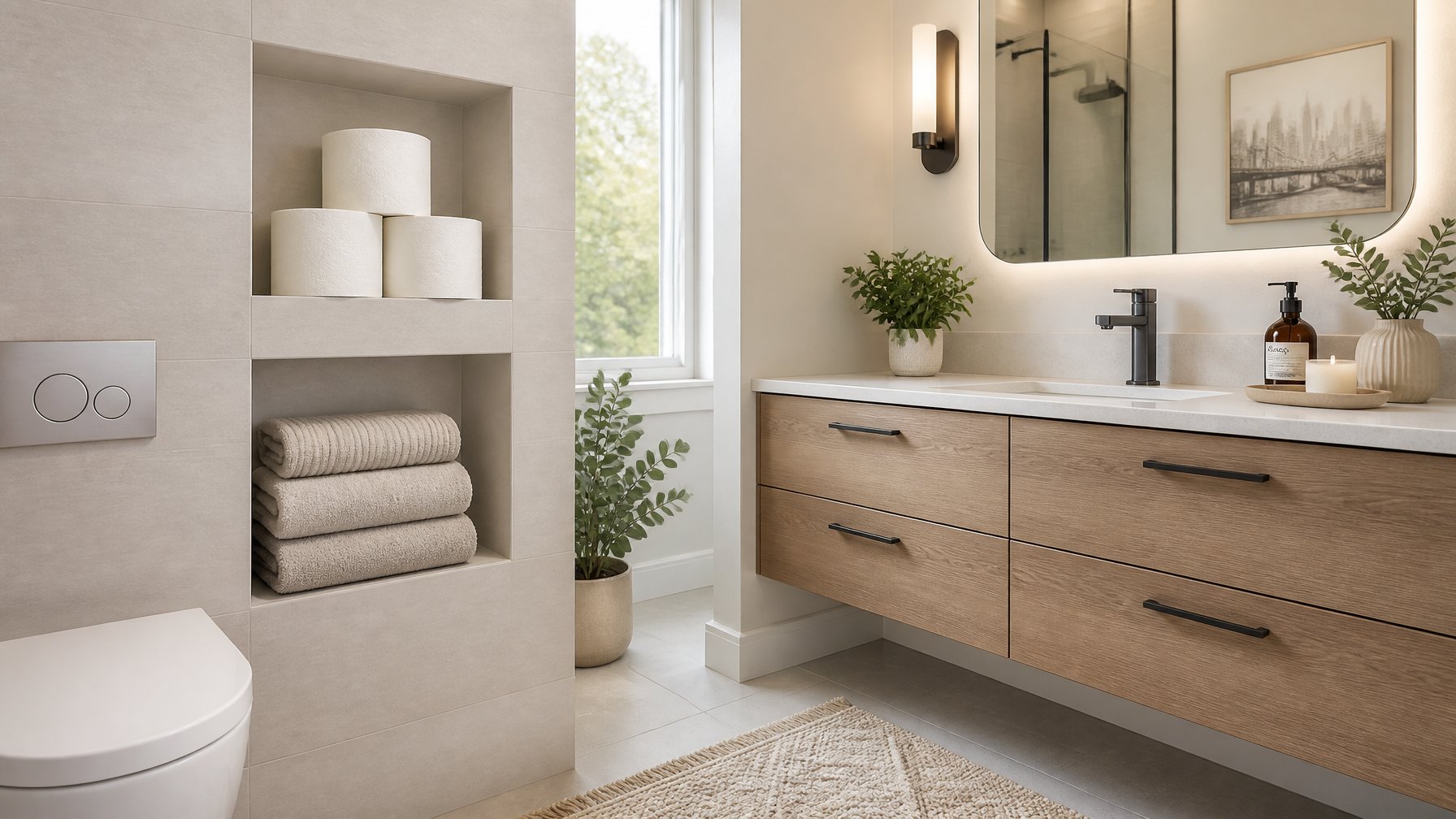
A recessed niche frees floor and counter space by tucking rolls and hand towels into the wall. Homeowners should compare wall depth and stud spacing before cutting; ask a contractor about plumbing or wiring behind the intended spot.
Choose a moisture-resistant backing and a trim style that matches the vanity hardware. The tradeoff is storage depth versus wall structure—deeper niches hold more but may need framing changes.
Measure towel sizes and reach distance to keep use comfortable. For layout ideas and contractor referral options, visit the bathroom remodeling page.
Install a small shelf or a slotted holder inside the niche to keep items organized and dry. They cost little but improve cleanliness and make the room feel less cluttered.
5) Slim-profile dual-flow faucet (Delta Trinsic)
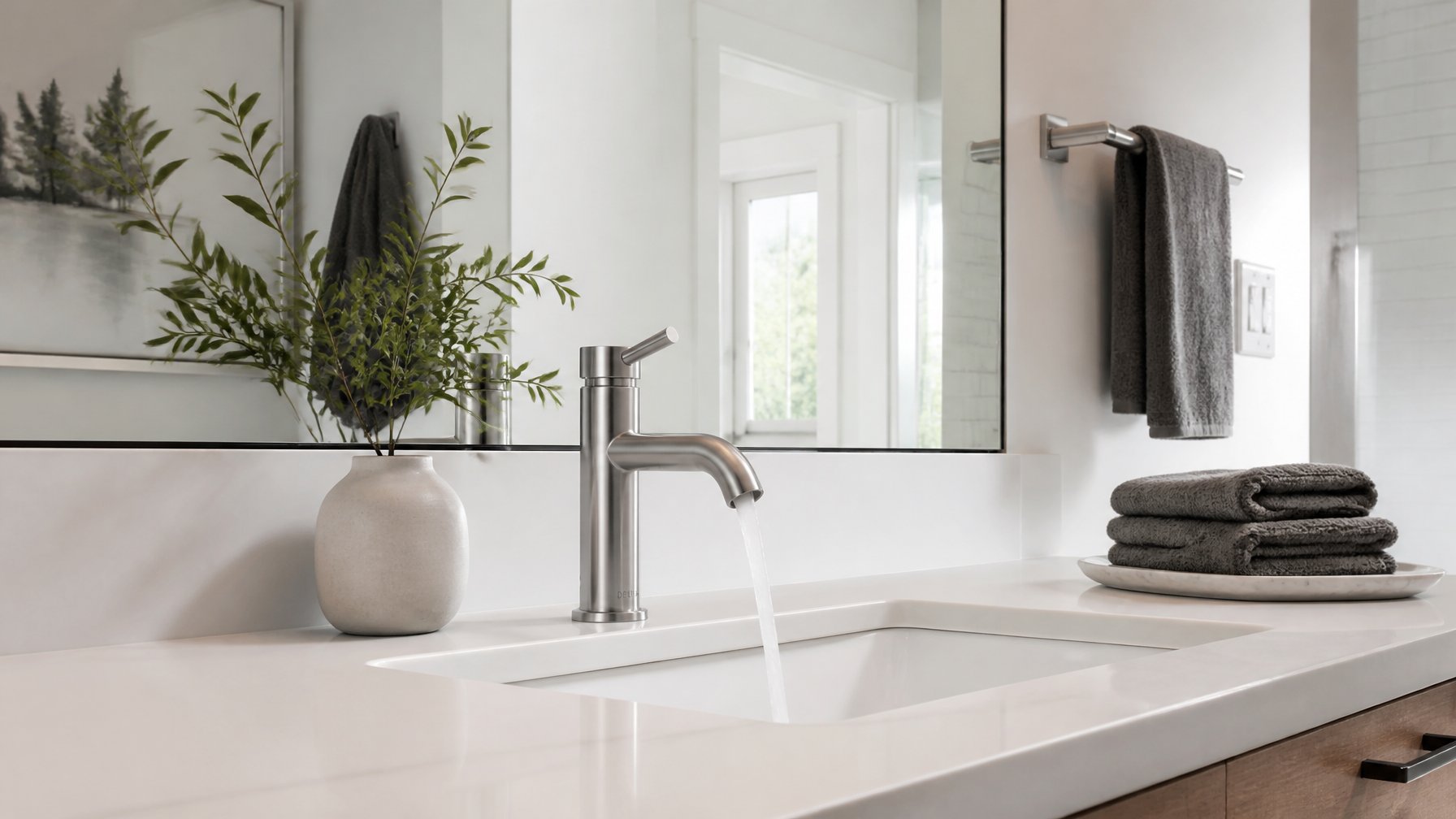
Homeowners should compare spout height, reach, and handle clearance when choosing a slim-profile Delta Trinsic. Measure sink depth and vanity backsplash space to avoid splash or cramped handles. Ask whether the dual-flow cartridge supports steady low-flow and full-flow settings for water savings without losing performance.
Consider finish options and ease of cleaning. Matte and chrome differ in fingerprint visibility and long-term wear. Tradeoffs include a slimmer look versus tougher cleaning needs; choose a finish that fits local hardness and maintenance habits.
They should also check installation type and hole spacing. Confirm whether the faucet fits existing countertop holes or needs a new deck plate. For professional installation or vanity layout help, visit the homepage.
6) Drawer dividers for cosmetics and grooming tools (Ikea VARIERA)
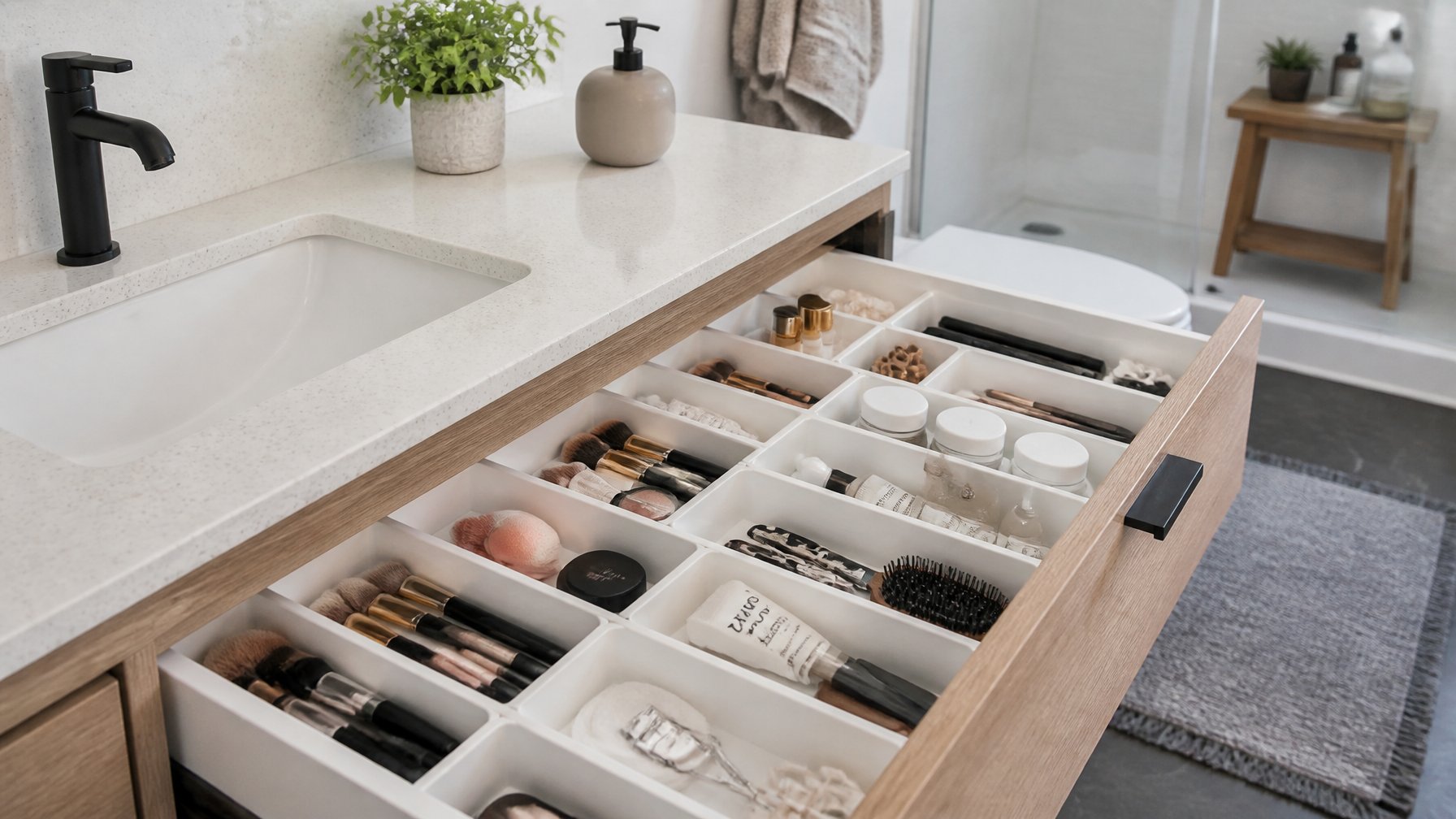
They keep small items visible and stop clutter from spreading across the vanity. Compare divider sizes to drawer depth and item height; shallow dividers work for brushes, deeper ones fit electric trimmers.
Ask whether plastic or bamboo fits moisture levels in Minneapolis bathrooms. Plastic resists water and wipes clean, while wood looks nicer but may warp without a liner.
Measure before buying and plan layout by item type: daily items up front, rarely used in back. Consider adjustable dividers or modular trays to swap when routines change.
For installation, check for interference with drawer slides and test fit one tray first. For buying options and project help, visit the homepage.
7) Open shelving with woven baskets for linens
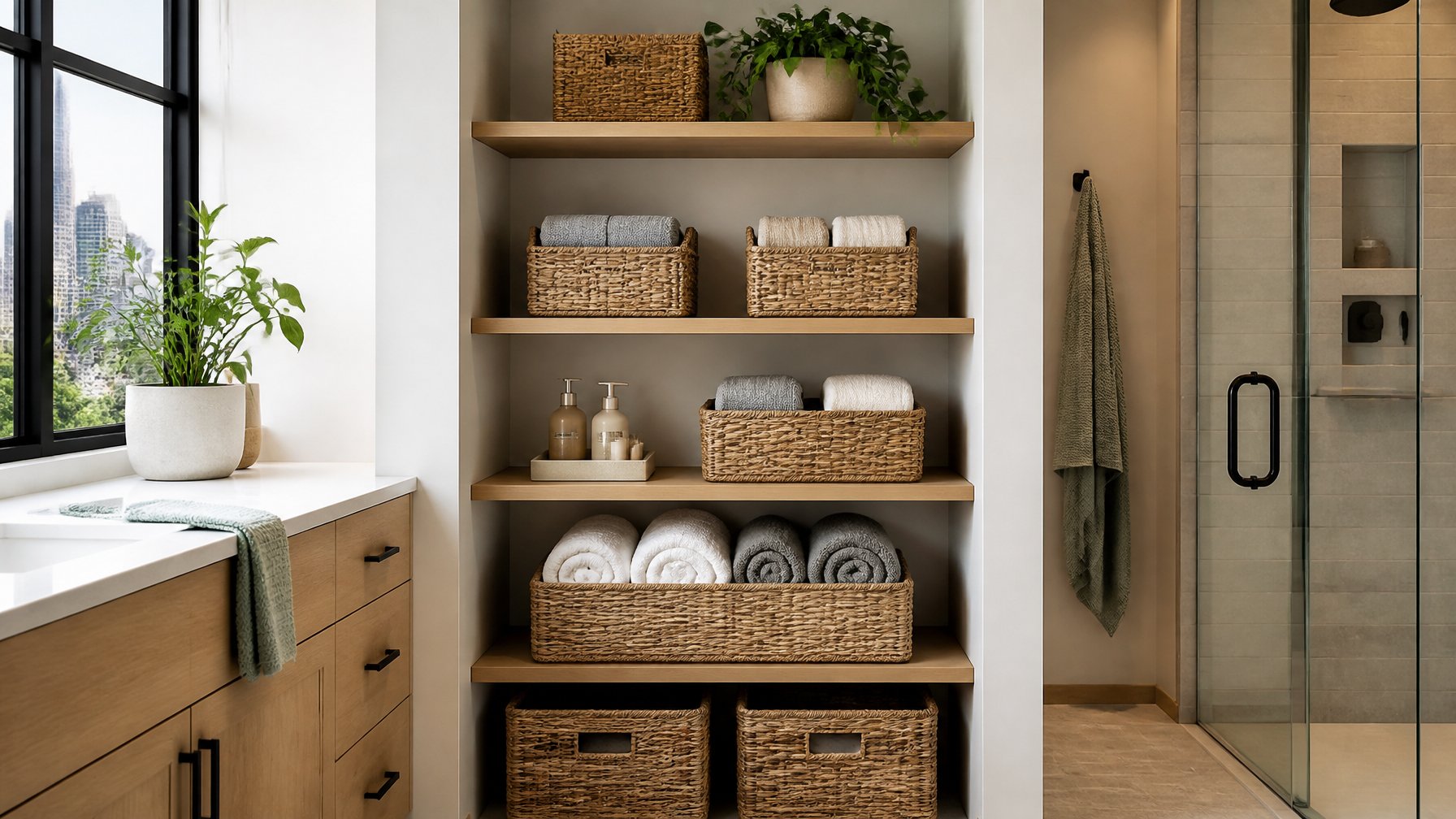
Open shelving keeps towels and sheets visible and easy to reach. Homeowners should compare shelf depth and material — 10–12 inches suits most towels, and solid wood holds up better in humid bathrooms. Ask about wall anchors and spacing so shelves stay secure under weight.
Woven baskets hide clutter while letting air circulate. They should test basket fit on a shelf and trade off style for durability; coated rattan resists moisture better than untreated wicker. Measure basket height so labels or lids clear the shelf above.
Consider placement near the vanity or linen closet for fast access. Think about how often linens are used: frequent items go on lower shelves, guest or seasonal items go higher. For installation help or layout ideas, visit the homepage.
8) Pocket door to save swing space
A pocket door slides into the wall, freeing the floor area a swinging door would use. Homeowners should compare track quality and wall framing needs so the door runs smoothly and lasts.
Ask if the wall can house the pocket mechanism or if a new stud wall is needed; that tradeoff is budget vs. floor space saved. Check door material and hardware weight limits, and whether soft-close features are included.
Consider how the pocket door affects privacy and sound. Solid-core doors are quieter but heavier, so confirm the track rating and installer experience.
For planning tips and other bathroom layout ideas, see the homepage. All images should show realistic home-improvement photos of pocket doors in bathrooms.